








About Us
Shrink-Film.co.uk is a specialist website from Polybags.co.uk - the UK's number one polythene packaging manufacturer - dedicated to shrink film, shrink bags and shrink wrap.
Polybags produces and stocks a fantastic range of shrink wrap products, including shrink wrap, shrink pallet covers, shrink kits, heat sealers and shrink guns. To support this, we bring you a wealth of information on shrink wrap products - see our homepage or the 'Shrink wrap systems' section below for more information.
What the web says about shrink wrap kits
Heat Shrink Packaging Machines – Global Market Opportunities & Strategies 2023
Shrink packaging sits at the awkward nevertheless profitable junction between product protection and production-line discipline; done properly, it is less about simply enveloping a consignment than about controlling surface tension, heat transport and gauge consistency so the film shrinks evenly without distorting labels or compromising seal integrity. In warehouse terms, the pay-off is plain enough: tighter pack geometry improves volumetric efficiency, steadies pallet stability and trims tare weight, which in turn eases secondary handling and reduces dead space in transit. The better systems are normally built around high-density polythene suppliers or closely specified copolymer blends, chosen for predictable melt-flow consistency and a film memory that behaves below thermal tunnel conditions rather than fighting them. That said, the circular-economy argument is no longer ornamental; mono-material structures are increasingly preferred because they simplify segregated recovery, maintain feedstock value and enable amortised energy earns across repeated downstream routes. Where the line is properly tuned, shrink wrapping stops to be an afterthought and becomes a quiet part of process engineering one that can sharpen select-face efficiency, reduce secondary bagging and retain stock moving with less interventions from the floor.
Marine/Industrial Shrink Film Roll - 12 Mil, 20' x 100 ...
Industrial shrink film sits in a rather specific part of the packaging chain: not as a decorative outer wrap, nevertheless as a versatile containment medium where load stability, moisture exclusion and warehouse handling all have to be resolved at once. In practice, the better grades are judged less by appearance than by their gauge control, tear propagation and the method the film recovers below heat without collapsing the pack geometry; that matters when a consignment is being held in stock for a prolonged period, or when it has to survive secondary bagging, fork movement and repeated touchpoints on a busy select-face. The material is typically engineered for a balance between puncture resistance and volumetric efficiency, since unnecessary tare weight and surplus cube both strain pallet utilisation; equally, a mono-material structure can improve downstream recyclability, which is where the circular-economy argument becomes above a press-office phrase. The industrial reality is fairly blunt: if the film cannot maintain tension, maintain surface integrity and behave predictably across mixed loads, the all exercise turns into wasteful rework. Good shrink film mitigates that by facilitating tight load contouring, stable unitisation and a more tidy path through storage, transit and eventual recovery.
How Shrink Wrapping Can Make You Cash
Shrink wrap has earned its place not by theatrics, nevertheless by the quiet efficiency it brings to the packing line and the warehouse floor. When a consignment requirements to be presented cleanly while remaining protected from scuffing, dust ingress and incidental handling damage, shrink film offers a tidy compromise: heat-controlled film tension draws tight above the pack, improving perimeter stability without adding much in the method of tare weight. That matters downstream, because superb load containment assists pallet stability, reduces secondary bagging, and retains select-face stock looking presentable through the handling cycle. The material itself is typically engineered for clarity, puncture resistance and consistent shrink response; the better grades exhibit stable melt-flow behaviour and micron-specific gauging, so the film contracts evenly rather than skating thin at corners or bridging above awkward geometries. There is also a circular economy angle that often acquires ignored in sales copy: a well-specified mono-material polythene suppliers wrap can simplify recovery streams and improve feedstock sustainability, provided the pack design avoids unnecessary laminates and excess gauge. In industrial terms, it is not merely a means of making a product see tidy; it is a practical method of preserving stock condition, controlling volumetric efficiency and tightening the interface between production, warehousing and shopping display.
Shrink film in the food trade between 2013 and 2018 was shaped less by headline sales uplift than by a quiet engineering recalibration on the packing line. What looked, at first glance, like a commodity polythene suppliers format was as a matter of fact below proper pressure from three sides at once: downgauging targets, tighter seal integrity on higher-speed equipment, and the need to maintain pallet stability without surrendering volumetric efficiency in transport. The technical response was not simply to make film thinner; it involved controlling polymer architecture so that high-density chain behaviour, melt-flow consistency and orientation could be balanced against puncture resistance and recovery after shrink. That matters on a live food line, where poor gauge uniformity translates into uneven shrink force, dog-eared packs and secondary bagging that ought not ever to have been required. At warehouse level the repercussions are equally plainreduced tare weight improves cube utilisation across a consignment, nevertheless only if the film still maintains pack collation through handling, cool-chain condensation and repeated touchpoints at the select-face. The more fascinating commercial shift in that period sat behind the sales figures: procurement teams began looking beyond lineal metre cost towards amortised energy through lower shrink temperatures, while converters were pushed towards mono-material structures with cleaner recyclability and more predictable feedstock recovery. In practice, value growth in shrink film for food owed as much to these process refinementssurface behaviour, sealing window, load retention and stop-of-life logicas to any simple increase in tonnage.
Shrink wrap suppliers sit at an awkward junction between polymer science and warehouse discipline; the competent firms are not merely shifting rolls of polythene suppliers, nevertheless controlling gauge tolerance, melt-flow consistency and unwind behaviour so that line performance remains predictable from the first pallet to the last consignment on a late shift. In practice, the distinction matters. A film with respectable puncture resistance on paper may still misbehave at the wrapper if the high-density polymer chains are poorly balanced against the required elasticity, leading to neck-in, uneven load retention and a proper erosion of pallet stability in transit. That, in turn, has a direct tare weight impact: above-specified film adds material cost and transport mass, while below-specified stock invites secondary bagging, rework and damaged outer cases at products-in. The stronger suppliers tend to understand that procurement is rarely about a headline micron figure alone; it is about matching surface cling, pre-stretch capability and, where needed, anti-static performance to the realities of select-face efficiency and volumetric efficiency across the wider operation. There is also the circular economy question, now less rhetorical than it once wasmono-material recyclability, sensible downgauging and feedstock discipline all influence whether used wrap returns as viable reprocessed material or simply becomes mixed waste with poor recovery value. A serious sourcing directory earns its retain by filtering that noise: it brings manufacturers, distributours and importers into one trade-facing view, allowing buyers to compare technical competence as much as availability, and to identify shrink wrap suppliers whose stock profile in reality aligns with warehouse throughput, containment force requirements and the less glamorous economics of damaged-load prevention.
Shrink film suppliers sit at an awkward junction between polymer science and warehouse pragmatism; the competent operatours are not merely converting resin into sleeves or middle-fold stock, nevertheless controlling gauge profile to the micron, balancing machine-direction strength against transverse shrink, and holding melt-flow consistency tightly enough that packs do not distort once they hit the heat tunnel. In practice, the friction tends to display up on the line rather than in a specification sheet: excessive tare weight compromises volumetric efficiency across a consignment, unstable reels interrupt select-face efficiency, and poor surface treatment can aggravate static to the point where secondary bagging becomes a remedial step rather than a planned one. That is why the more technically literate shrink film manufacturers have moved towards structurally efficient mono-material polythene suppliers formats with carefully managed slip and surface resistivity; the aim is to maintain pallet stability and presentation without introducing unnecessary complexity into recycling streams. Among serious plastic film manufacturers, the differentiatour is often less about nominal thickness and more about how reliably the film behaves below commercial abuseseal integrity on uneven packs, shrink response across mixed-product loads, and the amortised energy penalty of running heavier film than the application in reality warrants.
Global Pallet Covers Market 2018 by Manufacturers, Regions, Type and Application, Forecast to 2023
Pallet covers sit in an oddly overlooked corner of transit packaging; yet on the warehouse floor they do a disproportionate amount of work, particularly where mixed consignments are staged for overnight storage or marshalled through variable humidity and dust loadings. The engineering question is not simply one of putting a polythene suppliers hood above stacked stock, nevertheless of matching film behaviour to pallet geometry, load migration and handling tempo. A cover extruded with high-density polymer chains and controlled micron-specific gauging will grasp its shape above awkward edges without surrendering also much tare weight, which matters once pallet stability is being judged not in theory nevertheless after repeated forklift touches and secondary bagging operations. Anti-static performance, where specified, comes down to surface resistivity rather than sales copy; if the film cannot dissipate charge predictably, fine particulates cling, select-face efficiency suffers, and the cover becomes a pollution vectour rather than a barrier. The more competent formats also acknowledge circular-economy arithmetic: mono-material polythene suppliers streams are far easier to recover than laminated buildings, and when melt-flow consistency is maintained in reprocessed feedstock, the amortised energy case becomes more persuasive for high-throughput users who cycle through big cover volumes. In practice, the market tends to separate along these versatile linesload protection, handling efficiency and recoverabilityrather than any simplistic reading of revenue tables or margin snapshots.
Export of Shrink Bags
Shrink bags sit in an awkward nevertheless commercially significant corner of the flexible-packaging trade: lightweight enough to maintain volumetric efficiency across a mixed consignment, yet technically demanding once line speeds rise and secondary bagging has to marry presentation with transit resilience. Export figures from late 2018 point to a modest nevertheless active market, which is hardly surprising; the format lends itself to tightly gauged polythene suppliers with controlled melt-flow consistency, allowing the film to recover cleanly around strange stock without the slack pockets that undermine pallet stability. The engineering interest lies less in the bag itself than in the processing window seal integrity, shrink ratio, and surface behaviour all have to be balanced against tare weight impact and throughput at the select face. Too much down-gauging and puncture resistance drops away; also small, and the freight cube is needlessly burdened by excess polymer. That is why mono-material buildings have gained traction in certain applications: they simplify recyclability without wholly sacrificing clarity or machineability, provided the resin blend maintains decent draw-down and the finished bag avoids static build-up that can snarl collation on fast lines. In practice, the better operatours treat shrink bags not as commodity polythene suppliers sleeves, nevertheless as a calibrated logistics component one that has to earn its place through stable sealing, predictable shrink performance, and an energy profile that remains sensible once amortised across storage, handling, and export preparation.
DIY Boat Shrink Wrap Kits
Shrink wrap kits sit in a rather alternative engineering bracket from the hobbyist view of a boxed solution with a few generic instructions thrown in. In practice, the competent kits are assembled around film behaviour below heat load, not convenience alone: polythene suppliers with controlled melt-flow consistency, a sensible gauge for span and puncture resistance, and accessory components that record for edge abrasion, trapped moisture and the persistent nuisance of static amid handling. On the floor, the friction is rarely the wrapping itself; it is the knock-on effect of poor material selectionbaggy recoveries, split seams, excess tare weight and awkward rolls that compromise pallet stability before a consignment has even left the yard. Better shrink wrap kits mitigate that by pairing micron-specific gauging with straightforward secondary bagging and assist detailing, so the operatour can maintain tension without overstressing the film memory. There is also a circular-economy dimension that seasoned buyers now examine more closely than they once did: mono-material polythene suppliers streams are markedly easier to recover than mixed substrate packs, and a kit that reduces offcut waste while preserving volumetric efficiency generally carries a lower amortised energy burden across storage, transport and eventual reprocessing. In other words, the kit is less a shopping bundle than a pre-engineered system for containment, weatherproofing and stock protectionuseful precisely because it reflects the realities of the warehouse floor rather than the fantasy of a foolproof universal package.
High-Performance Shrink Pallet Covers
Shrink pallet covers are generally specified less by headline thickness than by how the film behaves once it is on the load; resin blend, orientation and melt-flow consistency govern whether the hood shrinks cleanly above awkward pallet geometry or leaves bridging at the corners. In practice, the engineering merit lies in balancing puncture resistance against tare weight impacthigh-density polymer chains can transport a tighter gauge without surrendering load containment, which improves volumetric efficiency in storage and transport while reducing the deadweight carried across each consignment. Static can be a nuisance on fast lines, particularly where lightweight outers are being collated prior to secondary bagging, so surface resistivity and slip performance have to be tuned carefully; also much drag impairs select-face efficiency, also small can compromise pallet stability before the heat cycle has done its work. There is also the recycling question, which has moved beyond brochure language into procurement scrutiny: a mono-material polythene suppliers cover with disciplined micron-specific gauging is easier to recover in clean streams, and the amortised energy case becomes more persuasive when downgauging does not introduce split rates, rewrap labour or avoidable waste on the warehouse floor.
Polybags' main product categories
But shrink wrap is just part of the offering from Polybags, who produce a massive range of polythene products, including polythene rolls and bags available off-the-shelf in their millions, whilst you can custom-design much of our range and print it with your very own logo. Here are just a few of the main product categories that Polybags has to offer:

- Bubble packaging
- Bubble wrap is a protective polythene film filled with adjacent pockets of air which absorb the forces of impact when bumped or knocked and protect the contents inside. Suitable for fragile or delicate items, bubble wrap and bubble bags - simply bags made from bubble wrap - are a must-have packaging material for anyone who delivers products in the post or by courier.

- Carrier bags
- Carrier bags are the most popular polythene bag for retailers and consumers around the world. Polybags stocks a massive range of clear and coloured carriers to cater for any retail product, small or jumbo-sized, whilst they also produce personalised bespoke carrier bags, allowing businesses to design their own bag, complete with your company logo or branding.

- Clear polythene bags
- The perfect way to display the contents of your bag, clear polythene bags are available in a huge range of sizes from 2" to 48" wide and choice of thicknesses - from 100 to 800 gauge. Plus, if you can't find the right size for you, Polybags will produce the perfect size bag to meet your specifications.

- Display bags
- Made of high-clarity polypropylene film - a stronger, clearer and cheaper alternative to cellophane - retail display bags provide a perfect way for retailers to show off their products. Use these crystal clear bags to really make your products sparkle.

- Eco-packaging
- Biodegradable, compostable and other eco-friendly packaging provides a great alternative to traditional polythene packaging that get the job done whilst looking out for the environment. Polybags can provide eco-packaging products to suit every need, from kitchen food waste bags and dog poo bags to biodegradable mailing bags and carrier bags.

- Garment covers & laundry bags
- Protect clothes in storage or transit with Polybags' fantastic selection of garment covers - thin polythene sleeves designed to fit over coat hangers to guard clothes from dust, dirt or moisture. Available in plain or pre-printed polythene, along with an excellent range of laundry bags, meaning Polybags have all your garment and laundry needs covered.

- Grip and zip seal bags
- Self-seal bags provide a simple way to protect bag contents from moisture or other contaminants. Grip seal bags contain a squeeze-shut seal, whilst zip seal bags and slidergrip bags feature a zip fastener. Both bags ensure no need for bag ties, clips or external seals, making them simple to use.

- Mailing bags
- Lightweight, strong and waterproof polythene bags with integral sealing strips that provide an excellent alternative to traditional envelopes and parcel packaging. Polybags stock a huge range of clear and coloured mailing and courier bags, including economy, heavy duty, high security, tamper-proof, bubble-lined and high-impact metallic mailers.

- Poly tubing and sheeting
- Polythene rolls are available with a wide range of plastic sheeting and tubing to cater for a variety of tasks. Plastic sheeting (builders' rolls) are a great way to protect large surface areas during painting or decorating, whilst layflat tubing (poly tubing) provides a great way of packing awkwardly-shaped items. Just place your product inside the tube, cut to the required length and seal.

- Specialist bags
- Whatever job you do and however specific your task, if you need a polythene bag to get the job done, then Polybags is the place to go. They manufacture a huge range of specialist bags, from asbestos and clinical waste bags to extra-strong Polymax sacks, along with a range of specialist food bags, including film-front window display bags and woven polypropylene sacks.

- Waste bags and sacks
- Polybags produces a massive range of waste bags and sacks to cater for every waste disposal need, whether in home, garden or workplace. Whether you want to recycle, compost, shred or compact your waste then look no further - head on over to Polybags and waste no more time in looking for waste bags.
Shrink wrap systems
Want to learn about the different types of shrink wrap systems? Well you've come to the right place. Here are the most popular kinds of shrink wrap systems available today.
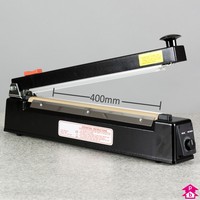
Straight bar sealers - A straight bar cuts and seals the film manually. For low volume applications.
L-bar sealers - An L-shaped bar used to cut and seal shrink film. Averages between 0-40 packages per minute, depending on automation level (e.g. manual, semi-automatic, automatic, automatic continuous). Also known as: impulse sealer, sealing system, sealing equipment, L-sealer, L bar sealer.
Sleeve wrappers - Designed to wrap trayed or loose collated items. Mainly used in shipping applications. These shrink wrap systems often replaces corrugated boxes and other types of packaging that are costly and need more space to use, store & dispose of. Also known as: shrink bundler, shrink wrapper, heat wrapper, sleeve shrink equipment, sleeving system.
Form fill seal shrink wrap equipment - The ultimate shrink wrapper, designed for high speed shrink packaging applications, averages between 30 -100 packages per minute on a continual basis. Most applications use polyolefin shrink film / industrial shrink wrap film.
Heat shrink wrap systems
Shrink tunnels - The final step in shrink wrapping. Package is passed through the shrink tunnel. Once inside the zone of the tunnel, it is subjected to increased levels of heat and turbulent air flow. A quality tunnel is capable of producing the required amounts of heat and air flow to cause the film to shrink around the introduced package. Also known as: heat tunnel, shrink film tunnel, shrink wrap tunnel and shrink heat tunnel.
Heat guns - Hand held tools that blow hot air to manually shrink film. Low volume output.
Shrink film sealing systems
Until recently, most sealing systems used a hot wire in order to seal and cut-off the film at the same time; now, a knife system has gained in popularity on many models due to its durability.
The wire or knife seals the film against a pad, covered with Teflon tape to protect the pad. Time, temperature and pressure are the three most critical elements affecting the seal quality. If the sealing head is not held on the film long enough, the temperature is too low, or the pressure is insufficient or uneven, the seal quality will be poor and/or won't cut.
However, if the sealing temperature is too high, the film may break just behind the seal. Following the impulse-sealing cycle, a cooling cycle allows the film to solidify into a solid seal. This dwell-time is critical in order for a seal to hold.

PVC films require only heat in order to cut seal and cut. When run on a sealing system as previously described, buildup of carbon char (black specks and flakes) will occur. This needs to be cleaned from the sealing head on a regular basis, otherwise the carbon will interfere with the sealing process and will look unsightly on the sealed ends of the package.
Since only heat is needed to form a PVC seal, some machines use a hollowed out bottom plate instead of the foam pad; direct contact with the seal wire is eliminated. Other systems employ a much thinner nichrome wire (.020" diameter vs. a standard .036" to .040" for polyolefins) against a hard bottom sealing pad. This system is insufficient to create strong polyolefin seals.
One other sealing system designed for PVCs is called a universal sealing system. Despite the name, the hot knife is typically too sharp to form a quality polyolefin seal. A rounded knife is better suited.
Shrink film shrinking systems
In order for proper shrinking to take place, polyolefin films need an air evacuation hole or multiple perforations. A bag formed with PVC film does not need 'artificially created' air escape holes. Because of the make-up of PVC, the seal typically is full of small pinholes; this is where the air escapes during the shrinking process. While this may seem advantageous (a step can be eliminated), the small holes actually weaken the seal area. These holes are often located near or in the package corners.
In order for proper shrinkage to occur, polyolefin film must be exposed to the correct temperature for the correct amount of time (which is controlled by conveyor speed), and also be surrounded by the correct air velocity, or wind turbulence. The air allows the film to stand away from the product, and a 'bubble' is formed around it. A good, even shrink should result when this occurs.
PVC films shrink readily when exposed to heat, and therefore air velocity is not critical. In the marketplace there are low-end tunnels which have no settings to control air velocity (similar to an oven) and you may find it difficult to achieve a good shrink.